Close
Search

Enter the words or phrases you want to find

Blog

Spring Into Hot Yoga

Heading into each Spring and Summer, I like to experiment with a different type of physical activity. Last year, I found myself trying to paddleboard and that was definitely not for me. I don’t mind getting wet while exercising, but when one finds oneself in the water more so than using one’s core or arms for stabilization, then perhaps it’s best to move on this season to a completely different form of mindful physical activity.hot yoga
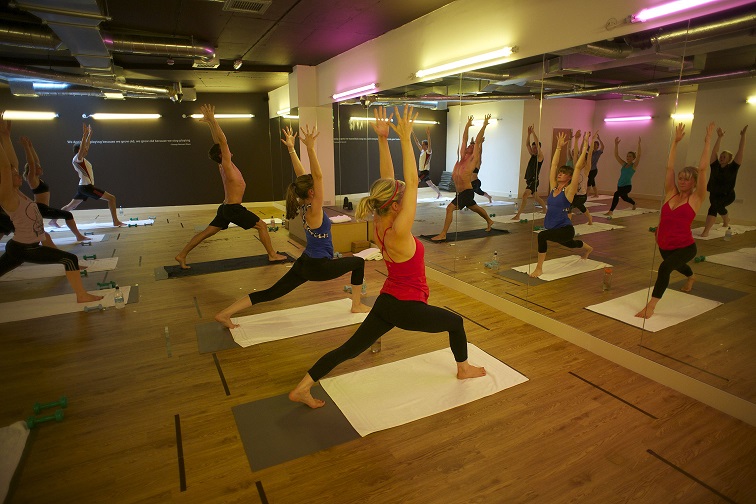
I continue to enjoy the challenge of instructing indoor cycling at my YMCA and have blogged about the ongoing physical and mental challenges of CrossFit. Running has taken a back seat lately as I have scaled back any long runs to just 1-3 miles, mainly due to protecting the cushioning of my knees. Some minor arthritis has found its way into my right knee, thus no more half marathons for this dude—at least not for now. In constructing an inventory of what’s next possibilities for a variety of physical activity this Summer, I was thrilled to find a side perk of my local CrossFit membership, limited monthly sessions of hot yoga.

HOT yoga! Yes, it is the wonderful mind-body fusion that I’d experienced numerous times at my YMCA combined with raising temperatures from a range of 85 degrees Fahrenheit to almost 105 degrees Fahrenheit with increased humidity levels! It took some serious poking and pulling from neighbors, also CrossFit members, to have me try my first session in late winter of this year—I knew after two sessions that I’d found my new adventure!

Don’t get me wrong. I don’t think anyone really loves hot yoga at the onset—there is much to which one must acclimate. For starters, it’s HOT! The increased temperature means fluids are lost more readily and must be replenished with copious amounts of water before, during, and after the sessions, which run anywhere from 60 – 75 minutes at my hot yoga location. Those sessions are not for the faint of heart nor for the faint of head. Monitor your body and let a qualified instructor know when you’re not feeling stable or generally well. All poses from yoga may be modified and hot yoga is no exception. Be prepared to take child’s pose often and at any time—I do it numerous times, whether prompted or not.
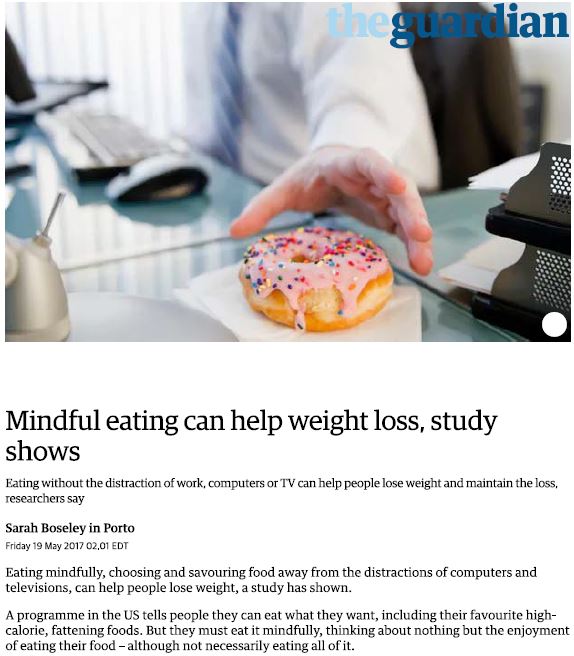
Eat Smart, Move More, Weigh Less Featured in The Guardian

The Eat Smart, Move More, Weigh Less program focuses on mindful eating, or choosing and savoring food without distractions such as computers or television. Mindfulness is paying attention to your surroundings and being present in the moment, eating with awareness and only eating when eating – not watching television or working on the computer. For example, if we are going to eat a food that is very high in calories, we would only eat one or two bites, but we would eat those one or two bites with awareness so that we are getting the most pleasure out of those one or two bites.

To test the theory of mindful eating, we ran a randomized control trial on the Eat Smart, Move More, Weigh Less program. The study results found that participants who are more mindful lost more weight than those who did not practice mindful eating. In addition, six months after the program had ended, 75% of participants had not regained the weight they had lost and some had lost even more. The full study results were presented by Eat Smart, Move More, Weigh Less PI, Dr. Carolyn Dunn, at the 2017 European Obesity Congress. We are honored that The Guardian has showcased the study findings in a recent article. To see the full article, click here: The Guardian: Mindful Eating Can Help Weight Loss.

Additional articles featuring the Eat Smart, Move More, Weigh Less randomized control trial results:

The Press and Journal

The Sun

Medical Xpress

SHEmazing

Summertime means GRILLING TIME! Don’t forget the vegetables!

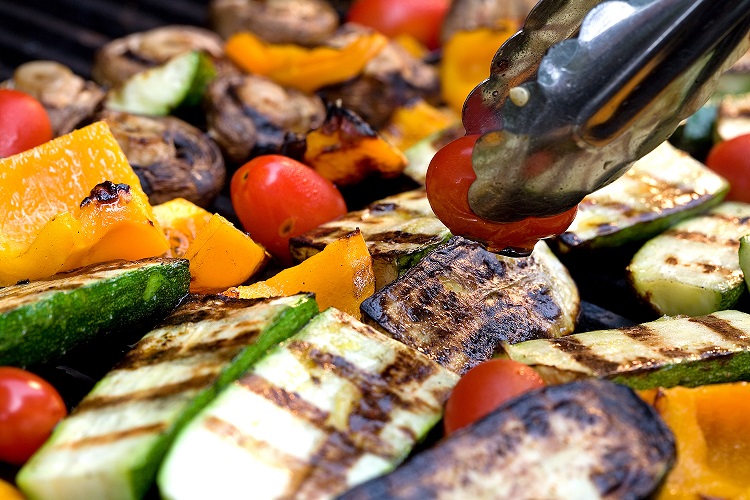
What is better than a warm summer night than cooking out on the grill?  Grilled chicken and fish are delicious and your healthy vegetables can be grilled right alongside them!  There is no need to dirty extra dishes on the stove or oven.  Just throw everything on the grill!grilled vegetables

One of many great things about grilling vegetables is that they are done in a snap.  Potatoes take about 12-15 minutes to cook on the grill, while less dense vegetables like broccoli, snap peas, summer squash, bell peppers, onions, mushrooms, and corn take just 5-7 minutes, depending on how tender you like them.

The best thing about grilled vegetables is that they are delicious!  The slight charring brings out the sweetness and adds a nice smoky flavor.

Marinades are key to delicious grilled vegetables, as they add moisture and flavor.

Steps for marinating vegetables:

  1. Chop vegetables to desired thickness and put in bowl.
  2. Pour marinade over vegetables and stir to coat evenly.
  3. Marinade vegetables for 30 minutes before grilling.

Here are a few to try depending on the overall flavor profile of your meal:

Lemon Soy Ginger

½ cup olive oil

½ cup fresh lemon juice

½ cup low-sodium soy sauce

1 clove garlic, crushed

1-inch piece of ginger, peeled and minced

Balsamic Dijon Vinaigrette

½ cup olive oil

½ cup balsamic vinegar

1 ½ tablespoon Dijon mustard

Salt and pepper to taste

Sherry Vinaigrette

½ cup sherry vinegar

3 teaspoons Dijon mustard

¾ cup olive oil

Chili Lime Vinaigrette

6 tablespoons vegetable oil (canola, grapeseed, or sunflower seed)

6 tablespoons white-wine vinegar

1-3 tablespoon jalapeno, finely chopped (can add more or less based on personal taste)

1-3 tablespoons finely chopped fresh mint leaves

Juice and zest of 3 limes

1 tablespoon sugar

⅛ teaspoon cayenne pepper

Salt and pepper to taste

Try these four different ways to grill your vegetables:

  1. Use a grill basket. Line the basket with aluminum foil to prevent drippings from the marinade.  If you do not have a grill basket, fold a 24-inch long piece of heavy-duty foil in half and fold up and crimp the edges to create a lip and prevent spilling.
  2. Make kabobs. Cut the vegetables into thick, chunky pieces so that they stay on the skewer.  Smaller vegetables like cherry tomatoes work well on kabobs.  Pineapples also work well on skewers and are delicious on the grill.  When grilling both meat and vegetables at the same time, make separate skewers for each, as the vegetables do not take as long to cook and will need to come off first.
  3. Wrap in a foil packet. Use a 24-inch long piece of foil and fold in half.  Open the foil and on one-half arrange thinly sliced vegetables in a single layer, slightly overlapping.  Once you have assembled the vegetables, fold the foil in half over top of the vegetables.  Fold over and pinch the edges of the bottom and top together to create a tight seal.  Close the grill and cook until the vegetables are tender.  Use caution while opening, as the steam is HOT.
  4. Put directly on the grill. Cut into thin, long pieces so that the vegetables do not fall through the grates. Try to cut your vegetables the same size so that they will cook uniformly.  Also, keeping vegetables thin will maximize the amount of surface area in contact with the heat allowing them to cook quickly and to get that crispy outside.  Corn, either shucked or unshucked, cooks well on the grill.  If you choose to shuck the corn, just lightly brush with some olive oil and a little salt.

Seven Simple Questions: Know Your Risk

The CDC (Centers for Disease Control and Prevention) has created a simple screening tool that we use on the Eat Smart, Move More, Prevent Diabetes website to help people consider their risk for prediabetes.prevent diabetes

Below is background information on why these questions are included and how they relate to your potential risk for developing prediabetes and type 2 diabetes.

Let me start by saying that researchers and doctors don’t absolutely know with 100% certainty why some people develop prediabetes and type 2 diabetes and others do not.

Here is what we do know:

  • Some risk factors cannot be changed. These include your age, gender, race/ethnicity, and if you have had gestational diabetes.
  • Type 2 diabetes is 2 to 6 times more likely to occur if you are an African American, Native American, Pima Indian, or Hispanic American living in the United States.
  • Increasing your physical activity and making mindful eating choices can reduce your risk and may be able to prevent you from getting type 2 diabetes.

CDC Screening Tool

Are you a woman who has had a baby weighing more than 9 pounds at birth?  (Yes = 1 point)

  • Gestational diabetes during pregnancy may increase the risk of developing type 2 diabetes at some point during your life.
  • Doctors and researchers are now looking at the potential link between a baby’s birthweight and “gestational age” and a mom developing type 2 diabetes at some point in her life. That is one reason why answering yes to this question is 1 point.

Do you have a sister or brother with diabetes? (Yes = 1 point)

Do you have a parent with diabetes? (Yes = 1 point)

  • Researchers are still looking into how exactly genetics and the environment you live in connects to your potential risk for developing prediabetes or type 2 diabetes.
  • Some studies have shown that up to 50% of children with type 2 diabetes have a brother/sister with type 2 diabetes.
  • Approximately 39% of people with type 2 diabetes have a parent with type 2 diabetes.

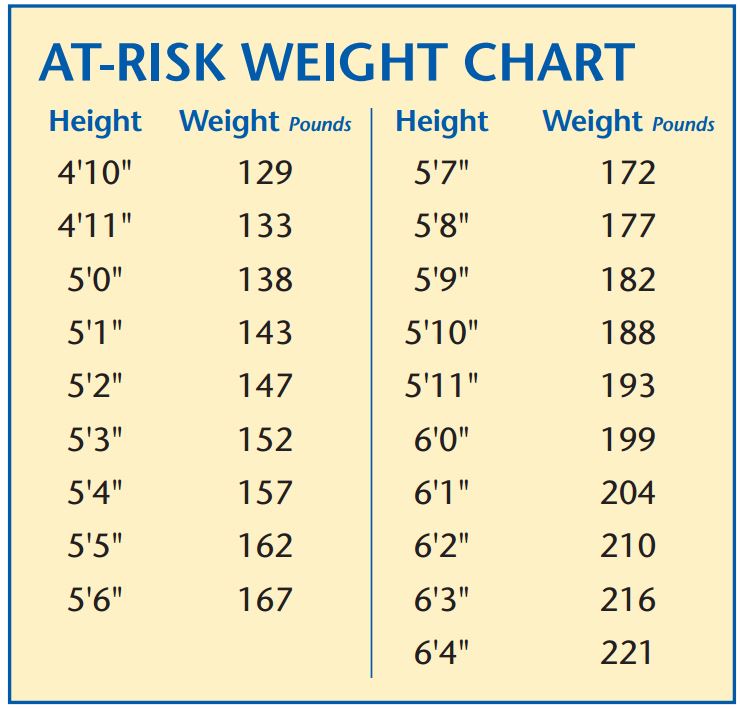
Find your height on the chart. Do you weigh as much or more than the weight listed for your height? (Yes = 5pts)

  • There is a link between body fat and how your body accesses or uses insulin.
  • Being overweight seems to reduce how much and how effectively your body uses insulin to break down the sugar (glucose) in our digestive system and blood.
  • Waist size affects how your body uses insulin. The risk for prediabetes goes up for men with waists larger than 40 inches around and for women with waists larger than 35 inches.

Are you younger than 65 years of age and get little or no exercise in a typical day? (Yes = 5 points)

  • Physical activity helps you control your weight, uses up glucose as energy, and makes your cells more sensitive to insulin. The less active you are, the greater your potential risk of prediabetes.

Are you between 45 and 64 years of age?  (Yes = 5 points)

Are you 65 years of age or older? (Yes = 9 points)

  • Your risk increases as you get older. This may be because of a tendency to exercise less, lose muscle mass, or gain weight as aging occurs.
  • Type 2 diabetes is also increasing dramatically among children, adolescents and younger adult and researchers are looking into why this is happing at such an alarming rate.

online dpp

CDC Screening Tool Sources


Sleep to eat less

02-bad-habits-insomnia-sleep-too-early

Would you be able to maintain your weight if you ate a large brownie every day, how about a hot fudge sundae? A new study showed that folks that don’t get at least 7 hours a sleep a night consume upwards of 385 calories more the day after a low-sleep night – about the number of calories in a large brownie or hot fudge sundae.

Making sure you get at least 7 hours, preferably 8 hours, of sleep each night is quickly becoming weight management strategy #1. The data continue to pile up the impact that sleep deprivation has on our eating and physical activity patterns. It is clear that getting enough sleep should be in our list of “must dos” to help achieve and maintain a healthy weight.


Eur. J. Clin. Nutr. 2016 Nov 2. doi: 10.1038/ejcn.2016.201.


Making Vegetables Cravable

We all know we should eat more vegetables. It is one of the few things upon which nutrition experts continue to agree. How do we get more vegetables, not just in the refrigerator or on the plate, but actually eaten?

We have to make vegetables cravable. 

We have to make vegetables a dish that friends and family ask for again and again because they are delicious. The easiest way to make them cravable just happens to be the easiest- roasting. I have some experience with this with my extended family. It’s ten people, ranging in age from four to 85. One night for dinner I made a selection of roasted vegetables, five different vegetables using different spices. There was not a vegetable left. They now ask for roasted vegetables and even make suggestions as to what we should roast. eat vegetables

I roast a few vegetables each week and keep them in the refrigerator. They are great heated in the oven, cold in salads, or room temperature. They also make a wonderful addition to your lunch box. Roasting is super easy. Here is a step-by-step roasting guide with a few recipes to get you started.

  • If you are choosing to make more than one vegetable, pick ones that have similar cooking times such as broccoli and cauliflower. Dense vegetables such as potatoes, winter squash, and other root vegetables have longer cooker times than vegetables higher in water such as summer squash, asparagus, or mushrooms.
  • Cut the vegetables in bite-size uniform pieces, keeping in mind they will shrink during cooking.
  • Toss the vegetables in a large bowl with a few tablespoons of olive oil and seasoning of your choice. It can be as simple as salt and pepper or a combination of spices. A favorite of my family is cumin, salt, and a dash of cayenne pepper. Make sure that each piece of vegetable is very slightly coated with oil, and the seasoning is will distributed.
  • Place the vegetables on a sheet pan, lined with foil for easy clean-up. Have a thin layer of vegetables that are not overcrowded which would cause the vegetable to steam instead of roast.
  • Roast at 375 degrees until tender. From 15 minutes for asparagus to an hour for dense vegetables such as winter squash. Roast until there are some pieces of charred bits which makes the vegetables super sweet and delicious.

Two of my favorite roasted vegetable recipes:

Spicy Roasted Cauliflower – This recipe calls for cauliflower, however, you can use any vegetable. Make extra of the spice mixture and keep it in the refrigerator or freezer for the next round of roasted vegetables.

Roasted Brussels Sprouts – This is an amazing vegetarian side dish. Add a small amount of turkey bacon for added flavor if you wish.


Create a Culture of Wellness

A workplace is great starting point for employee health improvement. employee wellnessWhen a culture of wellness exists, healthy behaviors become the norm in a work environment. The presence of this type of culture can improve the outcomes of a corporate wellness program due to the supportive and reinforcing environment. A workplace that possesses a culture of wellness supports these attributes to overall health:

  • Physical activity and exercise efforts are supported
  • Healthy foods are offered
  • Emotional health is valued
  • Importance of preventive care is emphasized
  • Leadership is engaged in wellness activities
  • Policies are in place to reinforce healthy behavior

In an upcoming blog series, we are going to provide tips and strategies to improve these health focus areas within your organization. A few examples include ideas for active team meetings, ways to be active at your desk, leadership engagement, and many more!

Stay tuned!


Don’t miss another great blog: Subscribe Now

“The skills I have learned will be with me the rest of my life.”

The following is a testimonial from a current Eat Smart, Move More, Prevent Diabetes participant, Margaret. Margaret sent us her feedback as she heads towards completion of Eat Smart, Move More, Prevent Diabetes. Way to go, Margaret!online diabetes

“I first took the Eat Smart, Move More, Weigh Less program 2 years ago and it has changed my life.  I have lost 60 lbs, my fridge is full of fruits and vegetables, we eat mainly whole grains now and I have been walking and moving more.  The Eat Smart, Move More, Prevent Diabetes program has taken me further into my journey by thinking about how my body processes blood sugar, and how exercise affects it, but also a more in-depth understanding of whole grains and which foods are better in terms of fiber and calories.  The mindfulness component then ties it all together.  Reducing stress and enjoying the moment has helped me be more successful in my journey to be healthier.  The skills I have learned will be with me the rest of my life.”


5 Easy Ways to Reduce Screen Time

One of my goals for 2017 was to reduce the amount of time I spent on social media and to instead, just live in the moment. Instead of being burdened by taking a perfect picture, crafting a clever caption, and keeping track of the number of likes, I decided to look UP (something I learned from this blog), and enjoy life around me instead of others’ lives living on my phone. Loosening the ties of social media has been incredibly freeing, eye-opening, and rewarding. I’ve also slowly started to reduce other forms of screen time in addition to social media, including tv, computer, and iPad.

As a part II to this blog about controlling social media time, I have found a few other tips and tricks to help me reduce my overall screen time:limit social media

  1. Remove all notifications for social media apps. I turned off all forms of notifications for the social media apps, especially the ones that appear when you have a locked screen. No longer am I being interrupted or tempted by an enticing notification to remind me to check a comment, picture, or like. This has been very helpful (and saves battery)!
  2. “Hide” all my social media apps on my phone. I used to have my go-to social apps on my home screen, so anytime I would open my phone I could easy open one of the apps. Now, I have moved all my social media apps into one folder on my phone, and I put that folder way back on the last page. That way, I have to be very intentional about going on social media and I am not reminded right when I open my phone. This one surprised me with how helpful it has been.
  3. Set limits. I set various limits and rules to my phone use, specifically social media use. A few include “no phone before bed” (has helped go to sleep earlier!), “no phone before breakfast” (has helped get out of bed), “no phone at the table” (this one has been set in place for awhile, but important to emphasize), and “no phone before exercise”. Even when I do go on social media, I only allow myself a few minutes. These rules have helped limit distractions and they have helped find motivation for exercise.
  4. Play music. The number one factor that has helped my family reduce screen time! Although using my phone less for social media, I am using it much more to play music. We set up a bluetooth speaker to easily connect to the phone and this has helped our whole family reduce the amount of time the TV is on. Now that there is music always playing, we never turn the TV on for background noise. I turn music on right when I wake up and right when I get home from work and change the Pandora stations based on how I am feeling. I used to cook dinner with the news on in the background, now I cook (and dance) with upbeat and energizing songs. We used to occasionally eat with the TV on in the background (the ultimate no-no!), and now we just switch up the music. This simple change has allowed us all to be more mindful and reduce screen time!
  5. Create alternate activities. My husband and I were noticing we got into a bad habit of watching too much tv on weeknights. So we set limits (mentioned above) and created specific activities to do before and/or instead of watching tv for different nights of the week. For example, Tuesday is “Reading Night” so the tv stays off, the music stays on, and we each choose a book or something to read (or a podcast since my husband isn’t the biggest fan of reading – but this night was actually his idea!). Thursdays we have “Game Night”, we have to play at least one game before turning on the TV. Our other nights we have a rule of taking a walk and waiting until 9pm to turn on the TV, and really, turning the TV on has only come down to Wednesday nights (Modern Family and Blackish can’t be missed).

These various tips and tricks have been extremely helpful for myself and my family to reduce screen time. Although some of them are specific and might not apply to everyone, hopefully, one or two of these can be of help. I’d like to say I never go on social media or rarely watch TV without having to write this blog, but hopefully there are others of you out there with the same struggles. Share your own tips and tricks, we can all learn from one another!


Corporate Wellness Made Easy: How We Can Help You

Facilitating a corporate wellness program for your organization can be overwhelming. Especially if you work in Human Resources and already wear a thousand different hats. Creating a wellness program can seem like just one extra chore to add to your list, and it can often fall by the waist side.

Partnering with Eat Smart, Move More, Weigh Less and Eat Smart, Move More, Prevent Diabetes can alleviate many challenges that come with implementing a wellness program. Some of the benefits of our partnership include:

online weight

  1. Online delivery format: Finding a facility or creating space for your wellness program at your organization would no longer be a factor. This is increasingly beneficial if your organizations have multiple locations. We also accommodate all time zones! Request a demo.

employee wellness

  1. Registered Dietitian Nutritionist (RDN) Instructors: Our highly-qualified instructors guarantee that your employees will receive quality instruction with evidence-based information. Learn more.

corporate wellness

  1. Personalized Marketing Materials: We create personalized flyers in hard and soft copies for you to distribute via email or to post around your facility. Learn more.

  1. Group Discounts: We offer a discounted rate for employer groups who purchase 20 or more slots, which leads to a LOT of cost savings! Not to mention the cost savings from employees lowering their A1c level through Eat Smart, Move More, Prevent Diabetes, which can save $600-$2,200 annually.

To learn more about improving the health and well-being of your employees, request a demo below or contact administrator@esmmpreventdiabetes.com.

employee wellness