
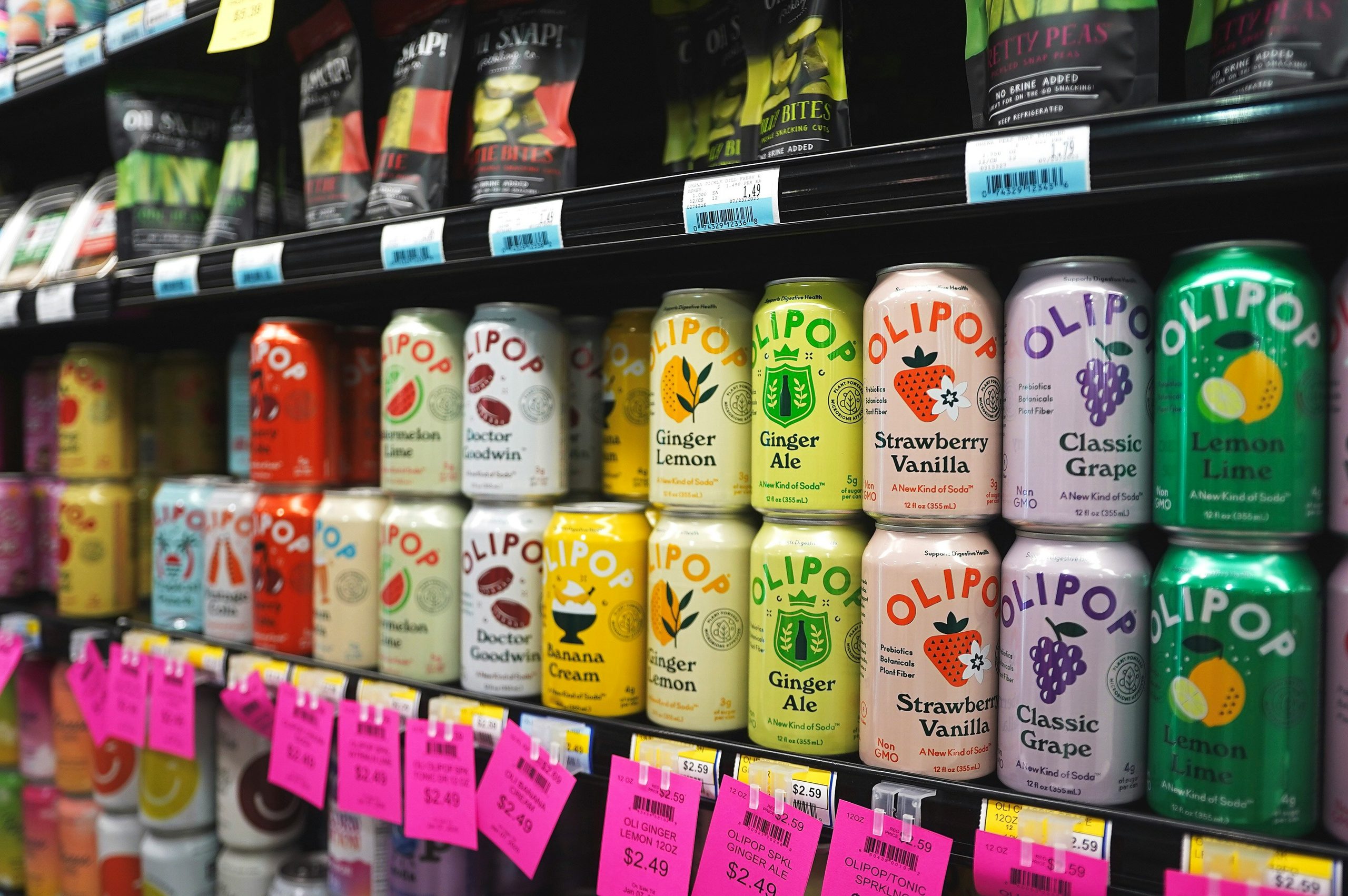
I smile every time I drive back from the beach and see a billboard near the turn to Greenville that tries to put a health halo on a favorite brand of cola. The prebiotic cola was launched earlier this year into the U.S. marketplace that already has more than 100 brands of prebiotic drinks. I was asked about one during a Pitt Partners grocery store tour I was leading, it was called Poppi. If you are truly looking for a prebiotic to improve your gut health remember that not just any fiber will do. You need to look at the ingredients. The International Scientific Association for Probiotics and Prebiotics defines a prebiotic as a substrate that is selectively utilized by gut microorganisms to confer a health benefit — not simply any fiber-containing ingredient. Nor does the term “prebiotic” on a food or drink label mean it has a meaningful amount of the right fiber. Regulations are quite lax in this arena. You should find a drink that has one of these fibers listed on the ingredient list…. inulin, fructans (FOS), galactooligosaccharides (GOS), xylooligosaccharides oligosaccharide, or soluble corn fiber (SCF). There may be others that work too, as this is an active area of research. By the way, for those readers who avoid ingredients they cannot pronounce, this is a good example of ingredients that you probably cannot pronounce but are health promoting.
It’s important to note that there is not an established recommended amount of prebiotic fiber good for gut health. The amounts used in studies vary depending on the type of fiber and range from 3 to 12 grams per day to get a health effect. If you are adding prebiotics to your regular diet, the advice is the same as if you are increasing any dietary fiber, do so slowly (no more than 2 -3 grams per day) to avoid tummy upset.
But, before you start adding fiber to your diet, track the amount you are already getting from fruits, vegetables, whole grains, and prebiotic supplements. We usually recommend 25 grams for women and 38 for men per day. If you need just a little more fiber the prebiotic soda might be enough. The Pepsi prebiotic soda has about 5 grams in 12 ounces. An international nutrition expert from Harvard suggests a practical way to get a sense of the overall carb quality of a product is to look at the ratio of total carb to fiber per serving. Use the Nutrition Facts label and take the number of total carb grams and divide by the number of grams of dietary fiber. If the ratio is 10:1 or less it’s pretty healthy carb food. Using that ratio, this cola would be an ok source of carbs and fiber.
Of course, food is complicated and you would want to look closer at the source of sweetness. If you are looking for less sugar, most of these drinks have more sugar than sparkling water and most diet sodas. To keep the calories lower, most use at least some non-nutritive sweeteners. Emerging research suggests that non- and low- calorie sweeteners have a negative effect on gut bacteria. Until we know more, we have started to suggest that you shouldn’t make a habit of drinking drinks with artificial sweeteners for heart health reasons. So, if you want one of these prebiotic sodas, pick one without artificial sweeteners, and a little bit of sugar should be ok.
A new study from UNC Chapel Hill found that prebiotic sodas fall in between regular sodas and diet sodas on calories, sugar and non-nutritive sweeteners while containing more fiber than any of the similar drinks. So, the important question is what is prebiotic soda replacing in your diet? If the answer is water, we don’t think that’s a great idea. If it’s regular soda that might be a better choice if you can afford it. You might be money ahead by eating an apple, pear or avocado or a serving of broccoli, or nuts. You might try a drink made with 1-2 Tablespoons of chia seeds and a dash of lemon juice or a yogurt or smoothie with oatmeal added. Sadly, neither milk nor clear juices have fiber, but you might enjoy a glass of prune or high fiber vegetable juice.
Don’t miss another great blog: Subscribe Now